Definition of shell scripts is a set of Unix commands written on a single file which is then executed by the file name. This shell script is also known by the name of the command file (Command File) or shorter again called Skripl. In this paper only discussed pembauatan scripts using the C Shell, Korn Shell and Bourne Shell. To make this shell script can use any text editor, bleak Vi, Emacs, and Pico. Example 1: echo "Date Now" date So it is run by calling the program name, eg name of the program example 1, it will display: Now Date: December 16, 1998 When the program is placed on the user's home directory (usually / home / user_name), then how to run the program is by typing "point garismiring. /": $ ./contoh1 (Giving ". /") While permition setnya be amended as follows: chmod + x example 1, it means that the file into an executable. If permition setnya not changed, it will arise the following message: $. / Try permition denied
Giving suffix (extension) on a script indicate the type of shell used. For example: -. Csh scripts for C shell extension -. Sh extension scripts for the Bourne shell or Korn shell In some systems, a shell script for C shell, on the first line should be preceded by a "#", while for other than the C shell shell used the sign ":". Example Example 2: # echo "Date Now: \ n" # is the comment section, the \ n so that the results out date # as shown in the next row.
Output: Date Now: December 5, 1998 # note the results with the example 1
Variable The variable is a name that can be used to accommodate a value. Variables can include names, numbers, or underscores (_) How giving value to vaiabel a. In the Bourne and Korn Shell: variable = value If the variable contains a particular character is written in a way to give double quotes (") Variable = "Character" b. In the C shell: @ Variable = value (the @ sign with a space separated variable) As for the variables that menganduing character by adding the word "set" So: set variable = "character"
Reading data from keybord The command to read the insert from the keybord is: "read" For example: echo-n "Enter your name:" read name echo "Hi $ name, how are you?" Results of execution: Enter your name: bom2stalker Bom2stalker Hi, how are you? Argument Processing This argument in the shell, also known as positional parameters. For example: ls-a-l, then: arguments [0] = ls argmunet [1] =-a arguments [2] =-l Table -1: Parameters related to the parameter position Bourne & Korn Shell C Shell Description $ # $ # Argv Stating the number of parameters $ 0 $ 0 $ Argv [0] Stating the name of a shell script $ 1 $ 1 $ Argv [1] To declare the first parameter .. .. .. $ * $ Argv [*] To declare all the parameters Especially for the tenth and setersunya parameters need to be expressed by $ {10} (numbers expressed in brackets {}). Example 3: The script with the Bourne / Korn shell : # Argument.sh # Example of processing an argument with the Bourne Shell and Korn Shell echo "number of arguments = $" echo "all arguments = $ *" echo "The contents of \ $ 0: $ 0" echo "content of \ $ 1: $ 1"
Example 4: the C shell scripts: # # Argument.sh # Example of processing an argument with the Bourne Shell and Korn Shell echo "number of arguments = $" echo "all arguments = $ *" echo "The contents of \ $ 0: $ 0" echo "content of \ $ 1: $ 1" The result of the execution of these two instances (3 and 4) are: $. / Hello argument.sh all parameters = hello The contents of $ 0: argument.sh The contents of $ 1: hello Both the C shell, Korn shell, or Bourne shell command have conditioned, in the form: - If - Switch (Cshell) - Case (Bourne and Korn Shell) The command is useful for repeating the process are: - For (Bourne & Korn shell) - Foreach (C shell) - Until (Bourne, Korn, and C shell) - While (Bourne, Korn, and C shell) - Repeat (C shell)
One use of the script is to use the File Profile. Profile file is an executable when a user login. The following is a profile file names for different types of shell: Table -2 Profile on shell Table -2 Profile on shell Shell Name Filename Profile Bourne Shell. Profile C Shell. Login Korn Shell. Profile These files can be used to put the actions perli done at login time. Often this file to use to run the application automatically, so users do login. This is done in user-user who is acting as operator. They do not go to the login prompt. To find an example profile file, you can see the contents of the existing profile file on each user's home directory. We can add commands to that file, because the file is actually a shell script. More information on each shell can be obtained online by giving the command: - Man csh (C shell To see the manual) - Man sh (Bourne shell To see the manual) - Man ksh (Korn shell to see the manual)
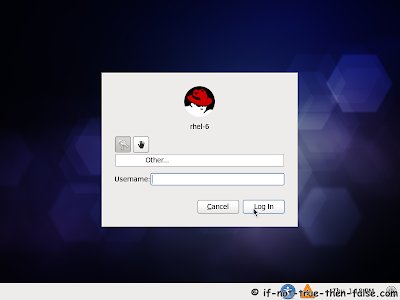
RHEL6 - Red Hat.Inc, penyedia solusi open source terkemuka didunia, dengan bangga mengumumkan ketersediaan rilis final Red Hat Enterprise Linux 6. Rilis ini adalah rilis yang dinanti-nantikan dari RHEL 6 yang memuat perbaikan-perbaikan dan itu tersedia untuk arsitektur i386, AMD64/Intel64, System z, dan IBM Power (64-bit).
Namun, Red Hat mengumumkan bahwa rilis ini tidak akan memberikan dukungan bagi arsitektur Intel Itanium. Selain itu, prosesor POWER5 tidak lagi didukung, hanya CPU POWER6 atau yang lebih tinggi yang akan mendapat dukungan.
"Red Hat Enterprise Linux selama bertahun-tahun menjadi platform mission-critical pilihan bagi banyak perusahaan. Pelanggan seperti British Airways, Citi dan NTT Communications telah menjadi mitra terpercaya dalam pengembangan platform Red Hat Enterprise Linux."
"Kami sekarang memasuki era enterprise computing di mana fleksibilitas, portabilitas dan interoperabilitas yang lebih penting daripada sebelumnya. Dan hari ini, kami memberikan platform yang dibutuhkan konsumen. Ini selalu menjadi fokus kami".
"Apa yang kami berikan lebih terbuka, lebih dapat diandalkan dan lebih komprehensif daripada produk lain di pasaran. Dimasa mendatang,ini adalah platform yang dirancang untuk menghantar pelanggan ke generasi berikutnya dengan virtualisasi dan cloud". - Kata Paul Cormier, executive vice president and president, Products and Technologies di Red Hat, pada press release.
Yang baru dengan Red Hat Enterprise Linux 6:
Peningkatan grafis installer;
Dukungan untuk file sistem baru (EXT4, XFS, NFS, block discard);
LVM enhancements;
Power management yang lebih baik dengan powertop dan tuned;
Peningkatan PackageKit dan Yum package managers;
Dukungan yang lebih baik untuk clustering, dengan Corosync Cluster Engine;
Peningkatan keamanan;
Pelabelan Network packet dan dukungan untuk IPv6;
Fungsionalitas Suspend dan resume;
Dukungan untuk multiple display;
Driver video Nouveau untuk kartu grafis Nvidia;
Dukunga Internasionalisasi;
KDE SC 4.3;
OpenOffice.org Office Suite 3.1;
Mozilla Thunderbird 3;
Mozilla Firefox 3.5;
Apache 2.2.15;
MySQL 5.1;
PostgreSQL 8.4;
Dokumentasi yang lebih baik;
Peningkatan dukungan C++;
Peningkatan Samba;
Dukungan penuh untuk KVM (Kernel-based Virtual Machine);
Dukungan Alternative PHP Cache (APC) untuk PHP;
Penambahan memcached.
Bagai manapun distribusi Red Hat Enterprise Linux (RHEL) lebih ditargetkan ke pasar komersial, termasuk mainframe, yang menikmati dukungan teknis selama 7 tahun atas Red Hat setelah perilisan. Versi baru RHEL dilepaskan cukup cepat dan dengan demikian, pengguna dapat meng-upgrade versi yang sedang digunakan ke rilis terbaru secara gratis. Red Hat didistribusikan menjadi empat versi RHEL: RHEL AS (Advanced Server), RHEL ES (edge, ekonomi atau server entry-level), RHEL WS (workstation) dan Red Hat Desktop.
Bagi Anda yang berminat mencoba, dapat men-download RHEL 6 beta 2 di sini.
According to FOSS game developer and Lips of Suna project lead Ari Mustonen (aka Nekotaku, amuzen) the answer is the perfect, intelligent, witty, dungeon crawler. As luck would have it he, along with the Lips of Suna dev team and supporters, have set about the monumental task of realising this vision, reaching a major milestone yesterday with their 0.2.0 release.
For players, Lips of Suna, or LoS as it's known, is a cooperative online, persistent dungeon crawler/RPG, with deformable terrain, procedurally generated dungeons,seamless gameworld, actual player skills instead of leveling, and witty storyline giving the the player and any friends online the opportunity to do battle along side the world's five races as they descend into the depth of the dungeons of Suna to save their world. Unlike a lot of other RPGs/FPS of various flavours success will really depend on knowledge, cooperation, strategy as well as skill.
The Freegamer team caught up with Nekotaku yesterday:
FG: The obvious question, of course, is why FOSS?
Because it's fun and convenient. The FOSS game development circle is somewhat small and fragmented but that and people generally being friendly and open-minded makes it easy to get into it. You only need to play by the few simple rules and you're a respected member of the community. You can host your project for free on a number of open source development sites, you can borrow useful code from incredibly many projects, you sometimes get free coverage on some popular sites, you can get lots of new users with next to no extra effort by getting packaged by Linux distributions, and so on. All that just because you're FOSS. It's a great choice for a hobby project even if you're not into the ideology itself, I think.
FG: LoS has gone through a lot of changes and re-iterations over the years, what is your overall vision for LoS; what would you like to achieve and how has this changed from the original vision
The grand vision when we started the project was to develop a manga style cooperative multiplayer RPG that had no experience levels or other character progression mechanisms. We wanted to have fun time making a game that one can pick up at any time and play with one's pals or some random people without having to worry about being rejected due to not being in the same level with others.
I think that the core concepts still stand strong but the details were horribly blurry for the longest time. The grand vision itself is easy to set in stone but guessing how things will fit the big picture and work together in the more detailed level is challenging. Quite a few smaller ideas have been amended on paper as it has become evident that they won't work as is. There have also been several occasions when an idea already being implemented, despite sounding good on paper, turned out to be so infeasible that it required major changes or had to be ditched entirely.
FG: You have implemented a lot of rather cutting-edge technologies in the LoS engine; how has surfing the cutting edge treated you so far and what new tech would you like to see gain traction?
I'm not sure if any of it is really that bleeding edge. The graphics code is probably the closest to it, though since the graphics hardware I target is already one generation behind the capabilities of the graphics card I have, it hardly feels like that. Most of the things in other areas have been done before too by other games.
Lots of things I did were new to me, though, and I had lots of fun researching and testing them. Especially in graphics programming, the newer things tend to be very easy to use, to the point that I actually regret not going for OpenGL 3 earlier. For example, implementing hardware accelerated skeletal animations only took one day to get working. There's a number of nice features that help you speed up the graphics code while actually making it simpler.
I don't know if other projects should bother much with the fancy new technology. On the other hand, when you have modern graphics card, it would be nice to have games with pretty graphics but on the other I'd rather like to see games focus on the basic gameplay and the content rather than some engine features. However, if you're interested in the new tech, I think it's not a bad idea to dip into it a bit, learn something new in the process, and implement a couple of things that your game can use.
FG: What is your vision of the future of FOSS gaming? Where would you like to see it go, and where do you think it will actually end up?
I'd like to see FOSS games explore difficult and controversial subjects more instead of obsessing over moral and political correctness. I think one of the great things about games is that you can experience harmful and disgusting things without real harm. However, FOSS games offer nothing to people who crave for such experiences since it's all but impossible to even find a character who says "fuck" or to hear a dry mention of sex, much less to see the real deal.
I think FOSS projects generally have a great sense of professionalism and want to look very organized and serious. The ideas tend to be traditional and tame most of the time as well. Even though I'd like to see fresh and radical ideas for a change, I doubt it's ever going to be commonplace. People make the kind of games they like themselves and organize their projects to benefit their own needs. Career motivations and maintaining a neat public image of oneself are big factors so it takes a lot of courage and nerve to radically defy the status quo.
FG: LoS has a rather... unique... sense of art direction. Are there any specific inspirations design wise in that regard, and how do you think it has affected the development process?
The project was founded by two regulars of a tiny anime and manga community so the choice of art direction was pretty obvious back then. We never concerned ourselves about whether the mainstream would like the style and what they'd say if they didn't. It's just me now but I still don't let the external pressure limit the artistic freedom.
Actually, there's no external pressure to speak of. Everyone in the FOSS circle is so timid that you can go for years without anyone being able to find the words to bluntly say that nudity and panties offend or intrigue them. As long as you have thick enough skin to ignore the regular trolls, you could easily be even more blatant without any meaningful consequences.
Over time, the art direction has been affected a bit by a couple of other games, such as Oblivion and its mods. It's eye-opening to witness someone make the skimpiest armor and others not only not complaining but rather endorsing it hundreds of times and downloading tens of thousands of times. I think people with a more adult taste are a legitimate target audience for a FOSS game, and an easy one even since there's no competition at all.
FG: LoS has it's own custom written 3d and game engine, whereas there are loads of open source engines of all shapes and forms already in existance. Why did you choose to go this route, and would you do so again if you where to begin a new game project?
Learning new things as I develop is a big factor to me and graphics programming has always intrigued me. I think the biggest reason why I chose this route was the educational aspect. Researching all the new techniques and learning the ins and outs of different rendering techniques has indeed been a lot of fun. Studying and testing all the different things took quite a lot of time but the 3D engine code itself is only a bit over 9000 lines of C code currently. Writing that with the knowledge I have acquired wouldn't take very long so I think it'd depend on circumstances whether I'd write my own engine for any future project or if I'd use an existing engine.
Using an existing engine isn't always so easy either. If you have a very specific list of requirements and some of them are less common ones such as dynamically changing terrain, heavy use of paged geometry, and modifying meshes on the fly, it's hard to tell if any given engine will fit your needs and if it doesn't, how easy it'll be to add the required features. Other factors such as uncertain requirements, ease of integration, quality of documentation, complexity of the code base, and so on can also significantly impact how well the engine will work for you.
I use quite a few libraries already, though. ENet for networking, SQLite for saving and loading data, and Bullet for physics, for example. The smaller libraries are easy enough to use but Bullet is giving me a lot of trouble and I'm afraid that doing things such as collisions responses for the terrain properly would require doing something unsupported such as implementing your own collision shapes. It's quite a pain and terrain physics are quite broken as the result.
I don't think there's one right way to sort out the engine. If you think that you'll have more fun if you write the engine code yourself and you'd like to take the time to write an engine that solves the problem well, write it yourself. If you don't have interest in engine development and don't mind some rough corners getting on the way of development of the actual gameplay and content of the game, use an existing engine or glue several libraries together to make one. Whichever route you take, it'll still take several years to complete an ambitious project, I think.
FG: Terrain deformation, has become fashionable, through Minecraft's arrival (1 million units sold and all that).. We understand that LoS will feature deformable terrain, but work was done far prior to the Minecraft craze. What were your inspirations and in what areas in the game is terrain deformation used?
I think Nethack was the original source of inspiration. The idea was to support mining in a similar fashion, but in 3 dimensions, to allow players to move more freely and gather resources in interesting ways. Since then, Dwarf Fortress has done good job at utilizing the third dimensions and, judging by gameplay videos, Minecraft seems to have a lot of interesting ideas too.
I think 0.2.0 is the first time LoS has had any real success with voxel terrain. The previous iterations had serious scalability and usability issues but it's finally getting to the point that you can have a full-sized map without the game crawling to halt, and you can do something useful with it. Getting it to work has been quite an exercise of trial and error and finding compromises and it still isn't quite there yet.
FG: You and other projects such as 0ad have chosen to get playability and enjoyability in sooner rather than later. What are the advantages and do you reccomend adjusting development cycles for all FOSS projects?
This may be an accurate statement in the grand intergalactic scope but from my point of view it took a long time until the actual playable bits started to emerge. I feel that LoS is actually the opposite since it wasn't much more than an engine technology demo until late last year, which is when I decided that the internals were good enough to be able to support the game. I think it'd be more accurate to say that LoS has simply chosen to get playable.
However, I do think that you should aim for playability as soon as possible, especially if you want to have contributors or have existing team members and you want to keep them around. If you're already working alone and don't have a lot of faith in your recruitment skills, it might be the same to get the most disruptive internal changes out of the way now when no one's around to get affected by them.
The timing can vary but you need to decide at some point that you're making a game rather than an engine, a technology demo, a portfolio or something else. Some genres are more forgiving about it than others but I think that at least content heavy game types and games with complex game mechanisms will never get done if you don't consciously start focusing on content and gameplay. RPGs are particularly nasty in that respect since with the engine alone you just have a fancy walking simulation and the interesting stuff is all content and intricate game mechanisms put together.
FG: 3 years of development is a long time, and you were involved from conception through the hard initial periods of coding without much in the way of tangibles to demonstarate and gather contributions with, through to to geting to the stage where the project is taking off. You would undoubtedly have garnered some insights on avoiding the slings and arrows of FOSS development. Any tips for FOSSers at the beggining of that journey?
This is probably the most useless tip ever but projects die when they're killed. I'd say the biggest factor determining how successful your project will be is how much and for how long you work on it. An hour or two of useful work per day with no end keeps the project healthy and eventually leads to success, whereas affairs with the opposite sex and other real world phenomena increase the chance of failure.
.
Now, following from that, I think that you as the developer are the primary audience of your own game. If you design the project so that you will love to work it for years to come, it's more likely to be a success than a project that's designed to appeal to the largest possible audience but the developer isn't ecstatic about it. This is because the former will probably finish whereas the latter will likely die when the developer loses interest.
FG: Who would you like to thank?
#freegamer for wasting so much of my time with all the interesting discussions and for allowing me to waste your time with random status updates and pointless rants
The LoS development comminity is a very accesible place with no formal obligations or requirements where people can come and contribute with feedback, 2d/3d art, music, scripts or code in whatever areas of the game they feel like. So head over to their forums, and visit their wiki.
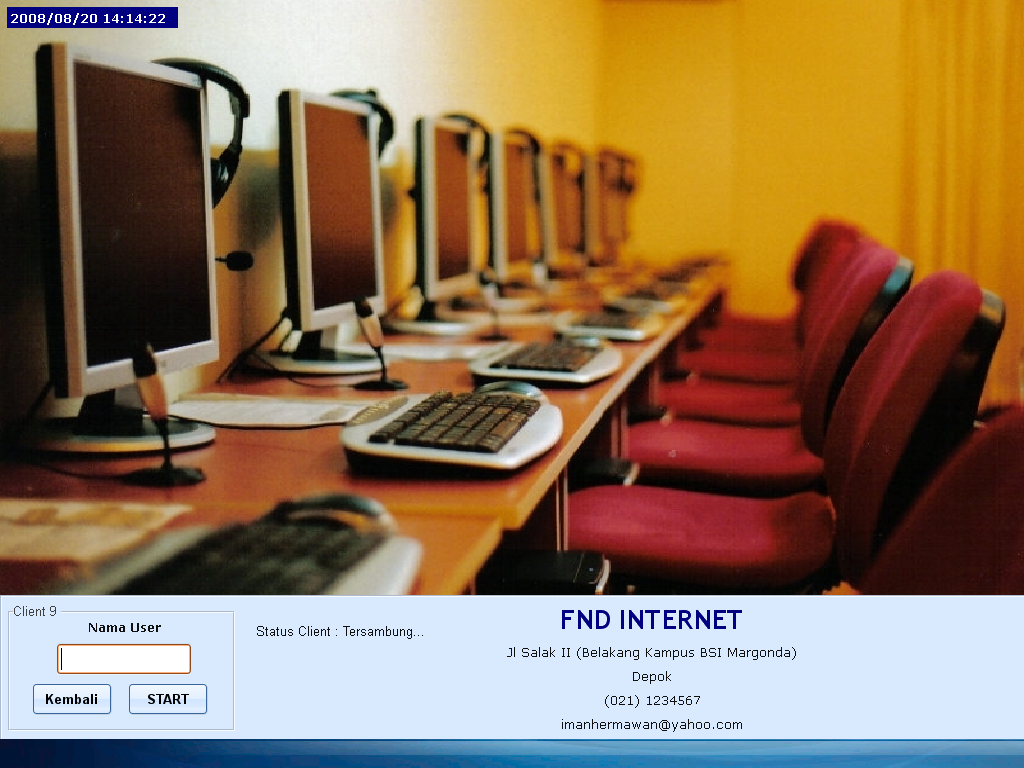
Here is information on how to install one of the billing program in Linux, namely OpenKiosk: http://openkiosk.sourceforge.net. This program can NOT be used in LTSP. One of the advantages is that the client / workstation can use the operating system Linux, FreeBSD / OpenBSD, and Windows. Billing program is also free.
Terms: Client (which Linux) to use KDE (not Gnome)
How To Install 1. Create a special directory to collect all the programs needed, command2 type the following at the console / terminal:
mkdir / downloads cd / downloads
2. Download the following programs into / downloads
cd /downloads tar xzvf db-4.3.28.NC.tar.gz cd db-4.3.28.NC cd build_unix ../dist/configure make make install cd .. cd ..
4. Install Qt : (SERVER & CLIENT)
cd /downloads bzip2 -d qt-x11-free-3.3.4.tar.bz2 tar xvf qt-x11-free-3.3.4.tar cd qt-x11-free-3.3.4 ./configure
Qt will ask whether you agree with the contents of his license, Enter type "yes" and press Enter
make make install cd ..
5. Install Nodeview (controller) (the SERVER)
cd /downloads tar xzvf nodeview-0.8.3.tar.gz cd nodeview-0.8.3 ./configure make make install
Nodeview then be run by typing / usr / local / bin / nodeview
6. Install kdex11client (the CLIENT)
cd /downloads tar xzvf kdex11client-0.3.1b.tar.gz cd kdex11client-0.3.1b ./configure make make install
7. Run Nodeview
/usr/local/bin/nodeview
Nodeview will ask for login to the Administrator. Because we run it the first time, then we can type anything as the password.
8. Setup Nodeview
Select the Settings menu - Configuration. Click the tab Workstation, Click on SETUP, Enter a workgroup name (free of course, eg cafe) Click the ADD, Click CLOSE,
Put the computers in your cafe: In the "station name", enter the computer name (example: klien1, klien2, etc.) In the "IP address", enter the IP address of this computers.
Then click on "ADD / EDIT" to add
Close everything, Nodeview will ask for the password for the Administrator, enter up to you. Then run it again Nodeview. Now OpenKiosk program is ready for your use. Hopefully useful..
MikroTikRouterOS� merupakansistemoperasiLinuxbase yang diperuntukkan sebagai network router.Didesain untuk memberikan kemudahan bagi penggunanya. Administrasinyabisa dilakukan melalui Windowsapplication (WinBox). Selain itu instalasi dapat dilakukan padastandard computer PC. PC yang akan dijadikan router mikrotikpun tidakmemerlukan resource yang cukup besar untuk penggunaan standard,misalnya hanya sebagai gateway.Untuk keperluan beban yang besar ( network yang kompleks, routingyang rumit dll) disarankan untuk mempertimbangkan pemilihan resourcePC yang memadai.
Fasilitaspada mikrotik antara lain sebagai berikut :
Protokoll routing RIP, OSPF, BGP.
Statefull firewall
Hotspot for Plug-and-Play access
remote winbox GUI admin
Tutorial lengkap hotspot MikroTik bisa di download disini
Panduan ini dibuat untuk memberikan pemahaman menggunakan nano dalam membuat atau mengedit sebuah file dalam sistem Unix-like.
1. Tentang Nano
Nano merupakan sebuah aplikasi editor berbasis teks untuk Unix dan sistem Unix-like. Ini adalah tiruan dari Pico, editor dari klien email Pine. Tujuan nano dikembangkan adalah untuk meniru Pico sebaik mungkin dan mungkin mencakup fungsionalitas tambahan.
Nano merupakan perangkat lunak bebas yang dirilis di bawah bendera GNU General Public License (lisensi GPLv3).
2. Perintah Dasar Nano
-Membuka dan menciptakan sebuah file di nano
# nano namafile
contoh:
# nano latihan
Catatan: Anda juga dapat lansung memberikan format ekstensi pada file teks yang dibuat tersebut, seperti latihan.txt atau latihan.odt
-Mengedit file di nano
# nano /etc/issue
-Simpan dan Keluar
Menyimpan file, tekan Ctrl+O (tahan tombol Ctrl lalu tekan O). Keluar dari nano, tekan Ctrl+X.
-Cut dan Paste
cut sebuah baris, tekan Ctrl+K. paste, tekan Ctrl+U.
-Mencari Teks
Tekan Ctrl+W, ketikkan string yang ingin Anda cari, kemudian tekan Enter. Tekan Alt+W, untuk mencari kembali string yang sama.
3. Penutup
Dengan memahami operasi-operasi dasar pada nano tersebut, nantinya rekan-rekan tidak akan bingung lagi jika mengedit atau membuat sebuah file teks di dalam sebuah Command Line Interface.